


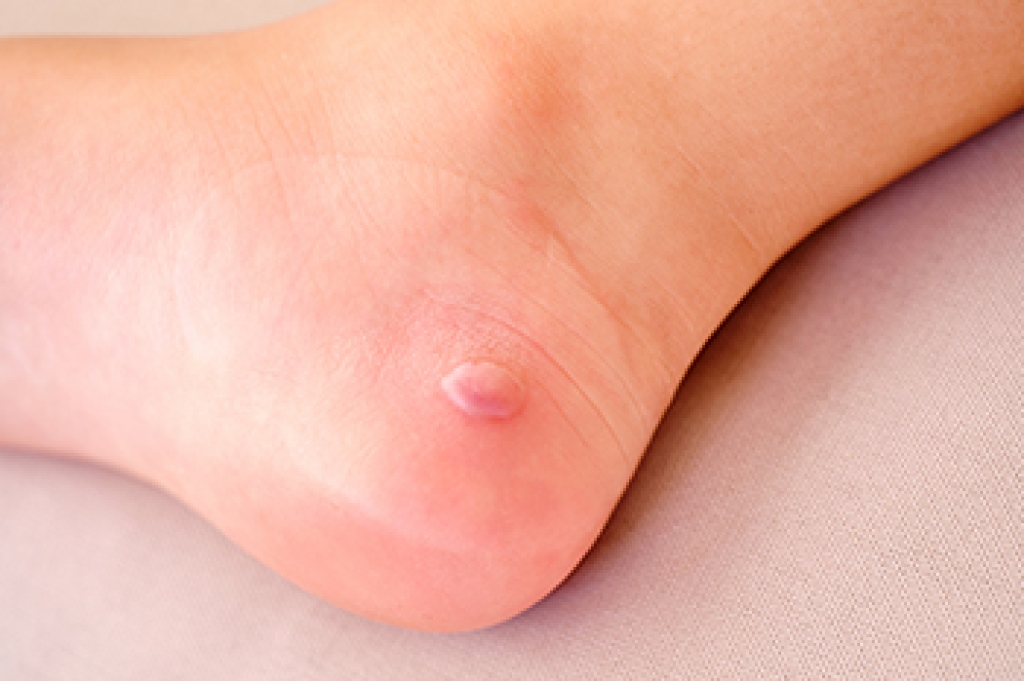
Blisters are small pockets of fluid that form beneath the outer layer of skin. On the feet, they frequently develop when repeated rubbing or pressure damages the skin. Wearing shoes that are too tight or that rub against certain areas of the foot contribute to blister formation. Moisture inside shoes also increases friction against the skin. A blister causes pain, tenderness, and redness around the affected area. Some blisters contain clear fluid, while others contain blood after greater skin damage. Blisters commonly develop on the heels, toes, or sides of the feet. Pain becomes more noticeable when walking because shoes continue rubbing against the irritated area. Although some blisters are minor, larger or painful blisters interfere with normal activities and require professional attention.
A podiatrist examines a blister and determines how seriously the skin has been damaged. An evaluation includes checking the blister's size, location, and surrounding skin. The podiatrist also looks for signs of infection or other problems that could affect healing. Treatment depends on the condition of the blister and what caused it. A podiatrist can safely drain certain painful blisters while protecting the skin covering the affected area. Professional treatment also includes protective padding to reduce pressure and friction. When infection is present, the podiatrist provides appropriate treatment to address it. The feet can also be evaluated for pressure points or structural problems that contribute to repeated blister formation.
Repeated blisters make walking uncomfortable and cause patients to change how they place weight on their feet. These changes create added pressure on other parts of the foot. A podiatrist identifies sources of friction and determines whether shoes are contributing to the problem. Professional care focuses on protecting damaged skin, reducing pressure, and supporting proper foot function. A podiatrist also recommends properly-fitting shoes or custom devices when foot structure contributes to repeated rubbing. Follow-up care helps monitor healing and reduce the chance of complications. If you have developed foot blisters, it is suggested that you schedule an appointment with a podiatrist for effective relief and prevention tips.
Blisters may appear as a single bubble or in a cluster. They can cause a lot of pain and may be filled with pus, blood, or watery serum. If your feet are hurting, contact Lance Greiff, DPM of Great Neck Podiatry. Our doctor can provide the care you need to keep you pain-free and on your feet.
Foot Blisters
Foot blisters are often the result of friction. This happens due to the constant rubbing from shoes, which can lead to pain.
What Are Foot Blisters?
A foot blister is a small fluid-filled pocket that forms on the upper-most layer of the skin. Blisters are filled with clear fluid and can lead to blood drainage or pus if the area becomes infected.
Symptoms
(Blister symptoms may vary depending on what is causing them)
- Bubble of skin filled with fluid
- Redness
- Moderate to severe pain
- Itching
Prevention & Treatment
In order to prevent blisters, you should be sure to wear comfortable shoes with socks that cushion your feet and absorb sweat. Breaking a blister open may increase your chances of developing an infection. However, if your blister breaks, you should wash the area with soap and water immediately and then apply a bandage to the affected area. If your blisters cause severe pain it is important that you call your podiatrist right away.
If you have any questions, please feel free to contact our offices located in Great Neck Bronx, NY . We offer the newest diagnostic and treatment technologies for all your foot care needs.

