


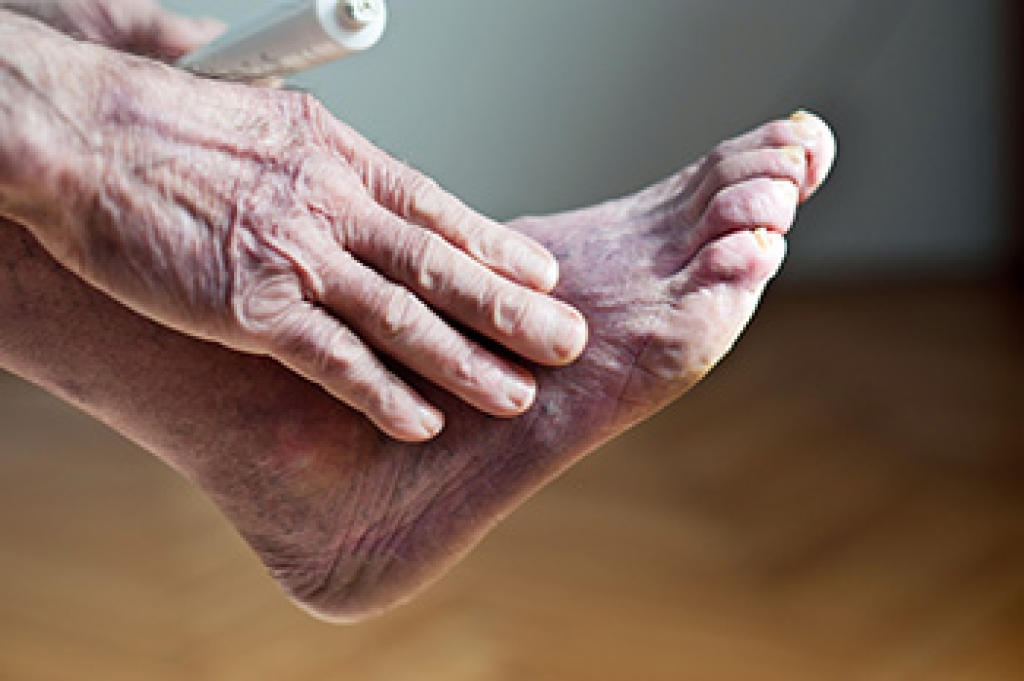
Diabetes can have a significant impact on blood flow to the legs and feet. Over time, elevated blood sugar levels damage blood vessels, causing them to narrow and stiffen. This reduces circulation to the lower extremities, and limits the delivery of oxygen and nutrients needed for healthy tissue. Poor blood flow slows wound healing and makes the feet more vulnerable to ulcers and infection, even from minor injuries. People may notice cold feet, skin color changes, hair loss on the legs, or pain when walking that improves with rest. Because circulation problems often develop gradually, they may go unnoticed until complications appear. Ongoing circulation changes increase the risk of serious outcomes that affect mobility and independence. Routine foot checks and early attention to symptoms are important. If you have diabetes and notice changes in your feet, it is suggested you see a podiatrist for evaluation and appropriate care.
While poor circulation itself isn’t a condition; it is a symptom of another underlying health condition you may have. If you have any concerns with poor circulation in your feet contact Lance Greiff, DPM of Great Neck Podiatry. Our doctor will treat your foot and ankle needs.
Poor Circulation in the Feet
Peripheral artery disease (PAD) can potentially lead to poor circulation in the lower extremities. PAD is a condition that causes the blood vessels and arteries to narrow. In a linked condition called atherosclerosis, the arteries stiffen up due to a buildup of plaque in the arteries and blood vessels. These two conditions can cause a decrease in the amount of blood that flows to your extremities, therefore resulting in pain.
Symptoms
Some of the most common symptoms of poor circulation are:
- Numbness
- Tingling
- Throbbing or stinging pain in limbs
- Pain
- Muscle Cramps
Treatment for poor circulation often depends on the underlying condition that causes it. Methods for treatment may include insulin for diabetes, special exercise programs, surgery for varicose veins, or compression socks for swollen legs.
As always, see a podiatrist as he or she will assist in finding a regimen that suits you. A podiatrist can also prescribe you any needed medication.
If you have any questions, please feel free to contact our offices located in Great Neck Bronx, NY . We offer the newest diagnostic and treatment technologies for all your foot care needs.

